Hold a used 12x14x1 filter up to the light and you can see a whole season of dust, pet hair, and pollen it kept out of your lungs and off your blower. That is the entire job of those three numbers. They set how cleanly the filter seals, and a seal that is even slightly off lets the invisible stuff sail right past. I have pulled enough loose, rattling filters out of return vents to say plainly that getting this size right does more for keeping your system running efficiently than almost any upgrade at the same price.
If you have been squinting at that label trying to make sense of it, you are in the right place. By the end of this page you will know what each number means, why the printed size is not the true size, and how the right fit guards the equipment that pushes air through every room. When I walk a homeowner through it, the conversation almost always ends with them choosing the right 12x14x1 air filter and never second-guessing the label again.
TL;DR: Quick Answers
- What does 12x14x1 mean? Width 12 inches, height 14 inches, and a nominal depth of 1 inch.
- What is the actual size? Closer to 12.00 by 14.00 by 0.75 inches.
- Which MERV should I pick? MERV 8 for everyday dust, 11 for finer particles, and 13 for the most your system can pull, all working toward cleaner air at home.
- How often do I replace it? About every 90 days, sooner with pets or allergies.
Top Takeaways
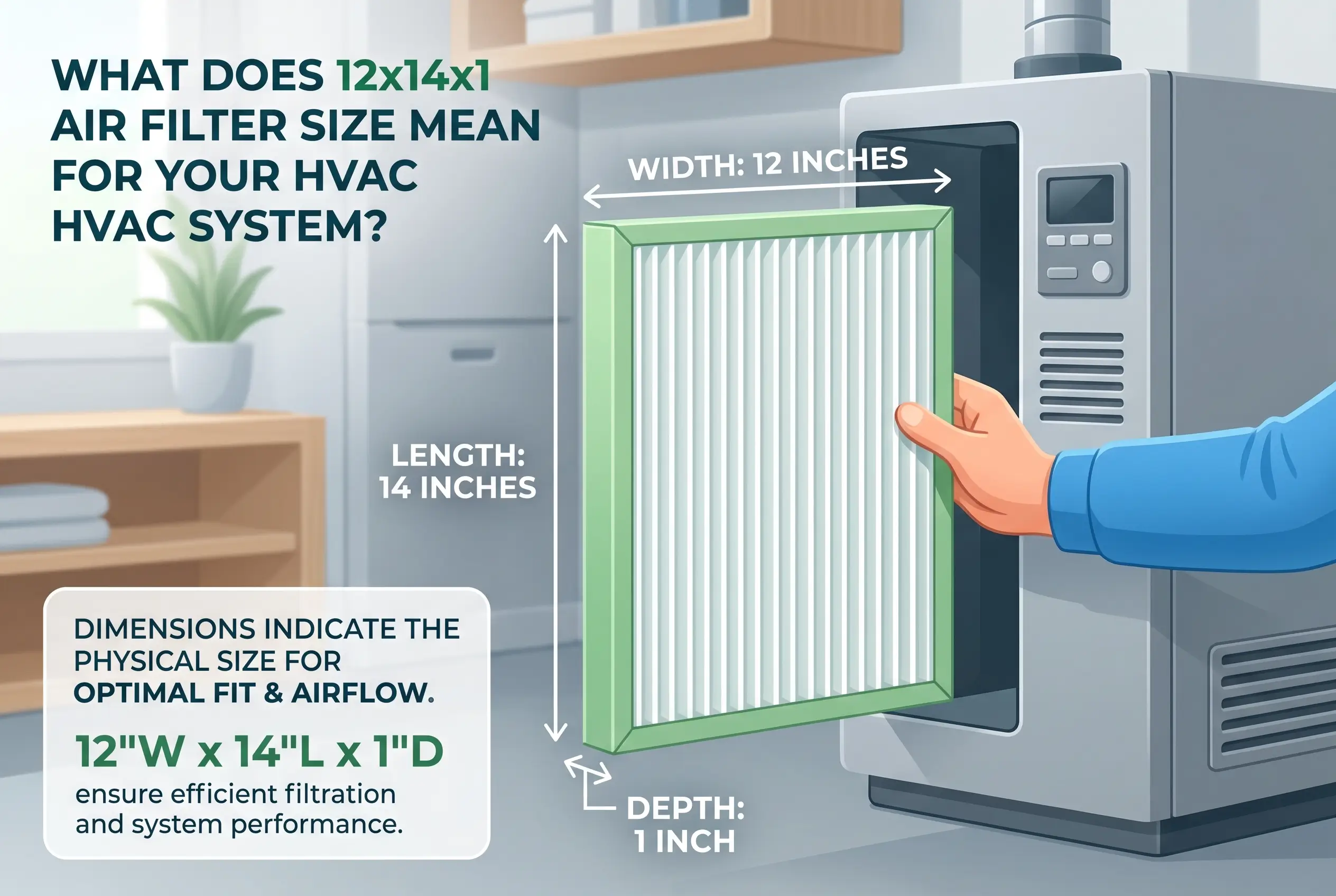
- The three numbers read width, height, and depth in inches: 12 wide, 14 tall, and 1 deep on the label.
- A real 12x14x1 measures close to 12.00 by 14.00 by 0.75 inches, so the label rounds the depth up.
- That third number is thickness, not a typo, and it has to match the slot it drops into.
- A snug fit stops air from sneaking around the frame, so the filter keeps trapping everyday dust and pollen instead of feeding it to the blower and coil.
- MERV (8, 11, or 13) is a separate call from size, with higher ratings capturing fine airborne particles as long as your system can move the air.
Breaking Down the Three Numbers on a 12x14x1 Filter
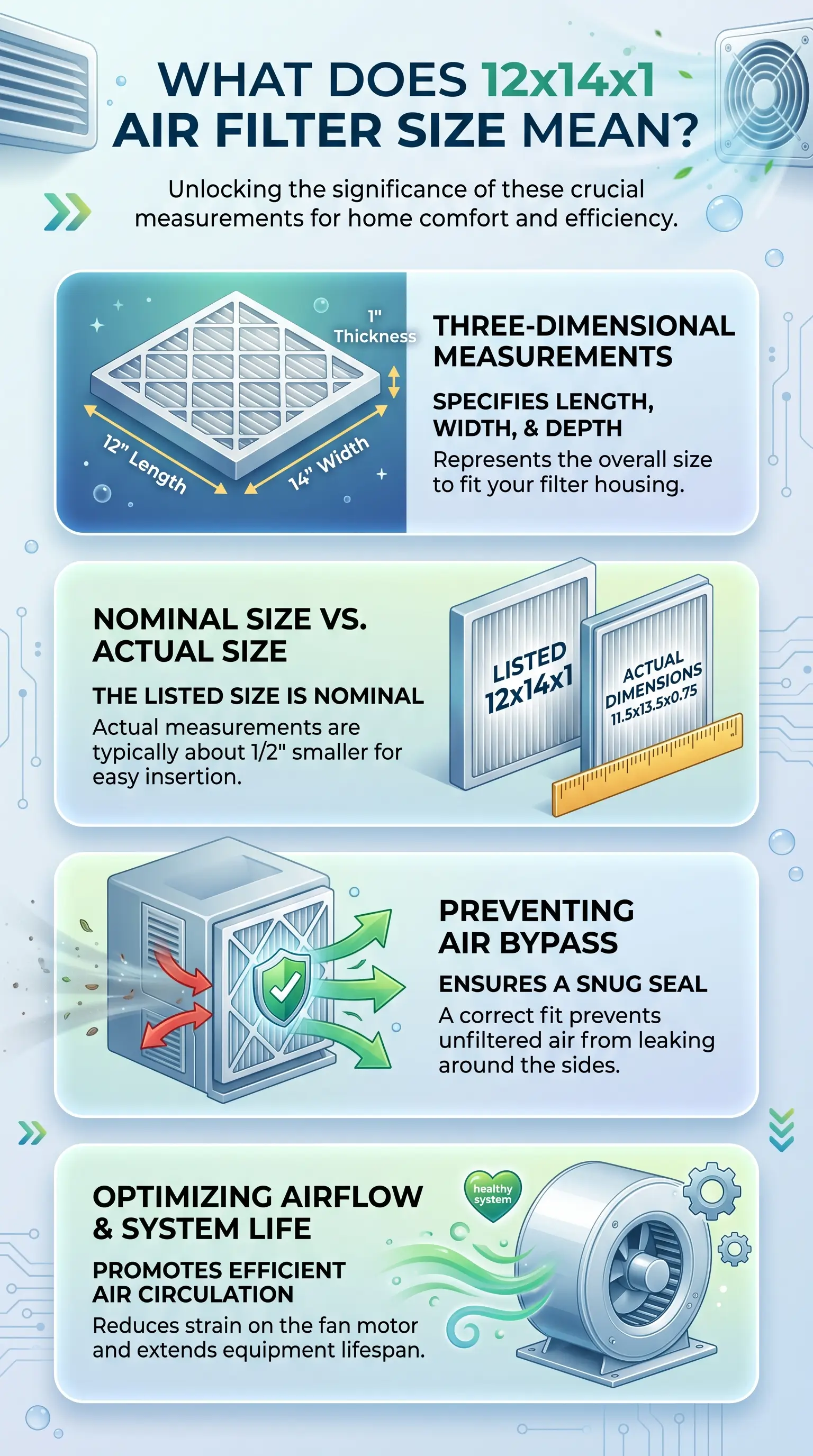
Read the size from left to right and it spells out width, height, and depth in inches. The 12 is the width and the 14 is the height. The 1 is the nominal depth, the thickness of the frame as it slides home. That last number fools the most people, so I will be blunt about it. It is depth, not a typo and not a rating. A one-inch filter and a four-inch filter can share the same width and height and still be completely different parts, and the deeper ones come built for longer-lasting pleated filtration in systems designed to hold them.
Here is the part that catches people off guard. The printed size is nominal, rounded for easy shopping, while the real filter runs a hair smaller. A 12x14x1 usually measures right around 12.00 by 14.00 by 0.75 inches, so the label bumps that three-quarter-inch thickness up to a clean one inch. The undercut is on purpose. It lets the filter drop into the slot without binding, so it can get on with defending against household dust.
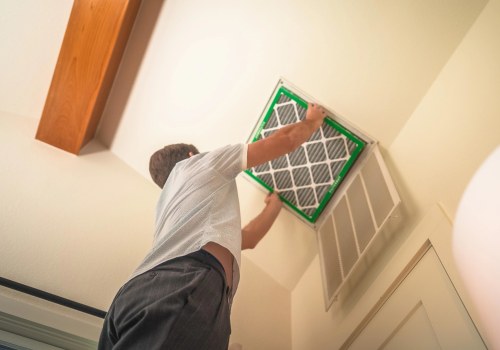
Fit is where the real performance hides. When a filter sits even a little too small, air does what air always does and takes the easy route, slipping around the frame and carrying dust straight into the blower and coil. Size it right and the air filter forces that moving air through its pleats, catching particles instead of recirculating them. A clean, well-sealed filter is one of the simplest ways I know to keep a system breathing the way its designer intended.
Size and filtration are two separate calls. This one comes in MERV 8, MERV 11, and MERV 13. The product testing behind these filters puts a MERV 8 at about 90 percent of airborne particles, a MERV 11 around 95 percent, and a MERV 13 near 98 percent. Higher numbers pull finer particles for fresher indoor air, but they also push back harder against the airflow, so I match the rating to what a given system can move without straining.
“The biggest mistake is buying by the printed number and never checking the slot. A filter that seats properly does more for your airflow than jumping two MERV levels on one that does not fit.”
Seven Resources I Trust for Sizing, Fit, and Filtration
When someone wants to read past my word on this, here is where I point them. None of these are selling a filter, and each one comes from a different, credible source:
- EPA, Air Cleaners and Air Filters in the Home: a plain-language look at how furnace and HVAC filters work and how to choose one.
- U.S. Department of Energy, Air Conditioner Maintenance: why a clean, properly fitted filter protects efficiency, plus how often to swap it.
- CDC, Cleaner Air at Home: practical filter and ventilation steps, including pleated filter use and change timing.
- ASHRAE, Residential Filtration FAQ: the engineering view on picking a MERV level without choking your airflow.
- Building America Solution Center, High-MERV Filters: selection and specification guidance for higher-efficiency filters.
- University of Georgia Extension, HVAC Filters and Indoor Air Quality: how the filter shields the blower and other parts from damage.
- Johns Hopkins Bloomberg School of Public Health, Regulating Indoor Air Quality: a health-focused take on filtration choices in the home.
Three Numbers That Show Why Fit and Filtration Matter
- We spend roughly 90 percent of our lives indoors, where most of our contact with airborne particles happens, according to the EPA. That is a lot of air moving through whatever your filter catches or misses.
- Heating and cooling eat nearly half the energy in a typical home, per ENERGY STAR, which is exactly why a clogged or bypassed filter quietly runs up the bill.
- About 88 percent of U.S. homes run air conditioning, and those systems draw roughly 12 percent of household electricity, reports the U.S. Department of Energy. A filter that fits keeps that equipment working at its best.
My Take: Size First, MERV Second
If I could break one habit for good, it would be the reflex to grab the highest MERV on the shelf before anyone checks the size. A perfectly fitted MERV 8 beats a poorly fitted MERV 13 every time, because filtration only counts when the air actually has to pass through the media instead of slipping around a loose frame. That is the same reason I pair every filter swap with a seasonal maintenance check.
A good filter is one piece of a healthy home, not the whole machine. Sealing leaky ductwork wins back air you would otherwise lose before it reaches a single vent. A project like insulating your attic does the same quiet work. Even reducing energy loss at home takes weight off the system, so the filter you chose can keep up. Measure your slot, confirm the size, and treat the filter as the easy win it is.
Frequently Asked Questions
Is a 12x14x1 filter the same as a 12x14 filter?
Almost. A 12x14 listing usually just drops the depth. For HVAC the third number matters, so confirm you need a one-inch depth before you order.
What is the actual size of a 12x14x1 filter?
Right around 12.00 by 14.00 by 0.75 inches. The label rounds that three-quarter-inch thickness up to one inch.
Why does the label say one inch when it measures three-quarters of an inch?
The printed size is nominal, a rounded figure the whole industry uses for easy shopping. The slightly smaller real size lets the filter slide in clean.
Will a 12x14x1 fit a slot built for a two-inch filter?
No. The width and height might line up, but a one-inch filter rattles around in a deeper slot and lets air bypass it. Match the depth to your system.
How often should I change a 12x14x1 filter?
About every 90 days as a rule, and sooner with pets, allergies, or heavy use. Changing it on schedule is the simplest path to better everyday air quality.
Does a higher MERV reduce airflow on this size?
It can. Denser MERV media pushes back harder, so make sure your blower and ducts can handle the rating first. If your system runs sensitive, you can lean on natural ways to clean indoor air alongside a moderate MERV. And if the airflow already feels weak, that is worth professional repair help before you touch the filter.
Get the 12x14x1 Size Right and Let Your System Breathe Easy
Now that each number on a 12x14x1 makes sense, measuring your slot and matching the depth takes about a minute. Confirm your size, choose the MERV your system can handle, and if the equipment behind it is past its prime, look into upgrading your cooling system so your filter has a healthy unit to protect.
Learn more about HVAC Care from one of our HVAC solutions branches…
Filterbuy HVAC Solutions - Miami FL - Air Conditioning Service
1300 S Miami Ave Apt 4806 Miami FL 33130
(305) 306-5027
https://maps.app.goo.gl/Ci1vrL596LhvXKU79